
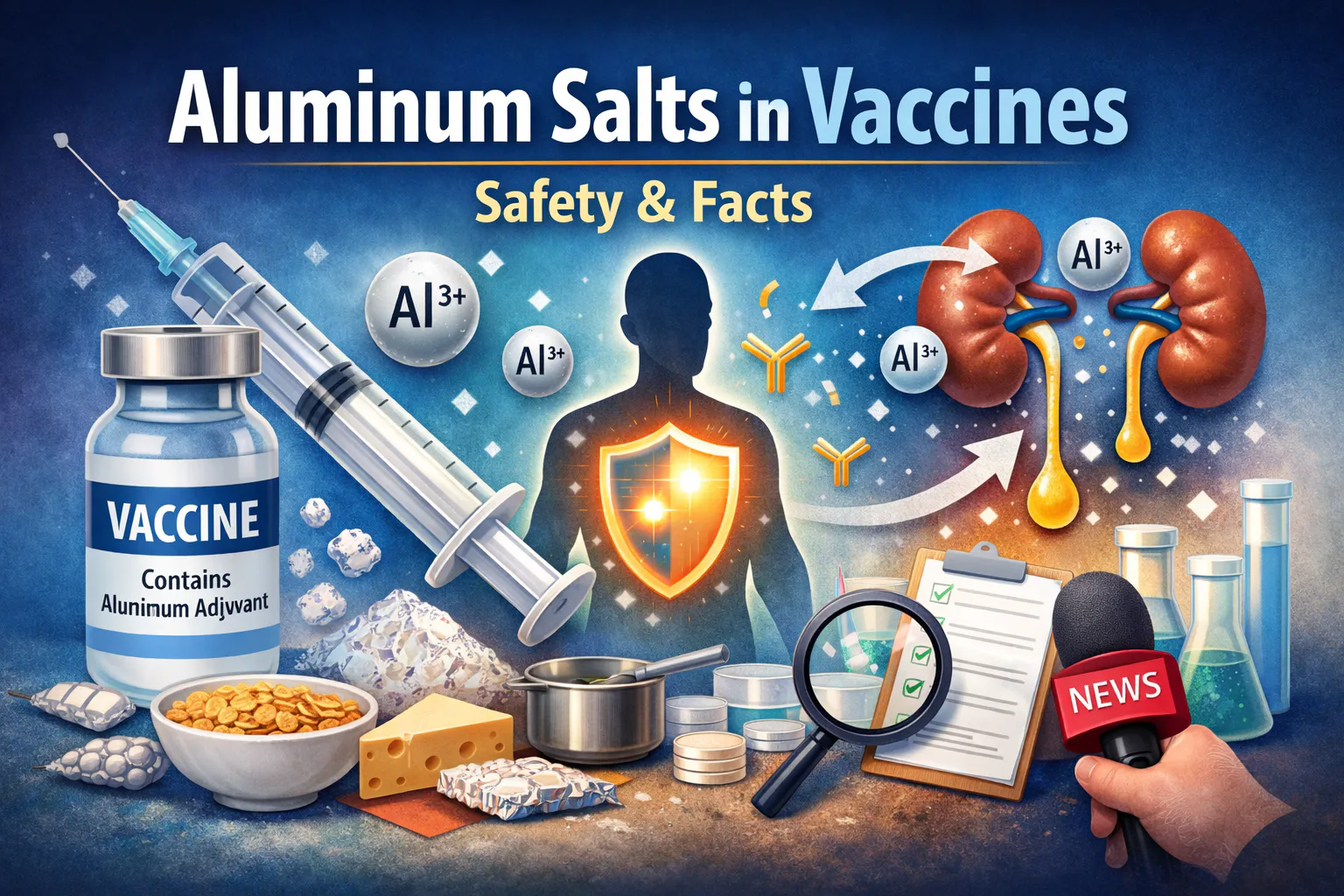
Aluminum salts in vaccines are often listed as ingredients.
That often raises concerns.
Is it metal?
Is it toxic?
Does it stay in your body?
These are fair questions.
Aluminum salts are added to some vaccines for a specific reason.
They are not preservatives.
They are not fillers.
They help your immune system respond.
This article explains:
- What aluminum salts are
- Why they are used in vaccines
- How much you are exposed to
- What happens in your body after vaccination
- What research says about safety
What are Aluminum Salts?
Vaccines do not contain pure aluminum metal.
They contain aluminum salts.
An aluminum salt is aluminum bound to another substance.
This changes how it behaves in the body.
Common aluminum salts used in vaccines include:
- Aluminum hydroxide
- Aluminum phosphate
- Aluminum potassium sulfate, also called alum
These compounds look nothing like foil or cookware.
They dissolve slowly.
They interact with immune cells.
Aluminum salts have been used in vaccines since the 1930s.
That means:
- Multiple generations have received them
- Their effects have been studied for decades
When you see aluminum listed on a vaccine label, it refers to these salts.
Why are Aluminum Salts Used in Vaccines?
Aluminum salts in vaccines are called adjuvants.
An adjuvant is a substance that helps your body’s immune system notice and respond to a vaccine.
It does not fight disease on its own.
Instead, it makes your body pay attention to the parts of the vaccine that teach immunity.
Here is how aluminum salts help:
- They keep the vaccine material at the injection site longer, giving your immune system time to react
- They make it easier for immune cells to detect and “capture” the vaccine material
- They create a mild local reaction that tells your immune system to respond
The result is a stronger and longer-lasting immune response.
Benefits for you:
- You get better protection from fewer doses
- The vaccine works even with a smaller amount of the active ingredient
- Your body learns to recognize the virus or bacteria more efficiently
Aluminum salts are a tool that helps your body learn to defend itself safely and effectively.
Vaccines That Commonly Contain Aluminum Salts
Not all vaccines contain aluminum salts.
They are used only when an adjuvant is needed to boost the immune response.
Vaccines that often include aluminum salts:
- Hepatitis A
- Hepatitis B
- DTaP (diphtheria, tetanus, pertussis)
- HPV (human papillomavirus)
- Pneumococcal vaccines
Vaccines that do not use aluminum salts:
- MMR (measles, mumps, rubella)
- mRNA COVID-19 vaccines
Aluminum salts are added carefully and each dose contains a very small amount.
Your body is exposed to far more aluminum from everyday sources like:
- Food and drinking water
- Infant formula or breast milk
- Cooking utensils
The amount in vaccines is tiny compared with what you normally consume.
How Much Aluminum is in Vaccines?
Each vaccine dose contains a very small amount of aluminum.
Typical range:
- 0.125 to 0.85 milligrams per dose (Source)
Examples by vaccine:
- Pneumococcal vaccine: 0.125 mg
- DTaP vaccines: 0.33–0.625 mg
- Hepatitis A: 0.225–0.5 mg
- Hepatitis B: 0.225–0.5 mg
- HPV vaccine: 0.5 mg
- Combination vaccines (e.g., DTaP/HepB/IPV): up to 0.85 mg
To put this in perspective:
- Infants ingest more aluminum from formula or breast milk in a single day than from all recommended vaccines combined
- Adults consume aluminum daily from food, water, and common products
Your body handles these small amounts efficiently.
Kidneys filter aluminum out of the bloodstream.
The aluminum in vaccines is measured carefully to stay well below levels known to cause harm.
This tiny dose is enough to boost your immune system without causing toxicity.
What Happens to Aluminum in the Body After Vaccination?
Aluminum salts in vaccines do not stay in your body permanently.
After injection:
- They dissolve slowly at the injection site
- Small amounts enter the bloodstream
- Most aluminum is filtered out by your kidneys and excreted in urine
Your body handles this efficiently if your kidneys are healthy.
The slow release at the injection site allows your immune system to respond over time.
This controlled exposure is enough to strengthen immunity but far below levels that could be harmful.
Aluminum from vaccines behaves differently than aluminum you ingest in food.
Injected aluminum goes straight to the tissues and is slowly cleared, whereas dietary aluminum mostly passes through your digestive system without entering the bloodstream.
Safety Profile and Possible Side Effects
Aluminum salts in vaccines have been studied for decades.
Common and Mild Reactions
- Redness, swelling, or soreness at the injection site
- Small firm lumps that usually go away over time
- These reactions show the immune system is responding
Rare or Uncommon Effects
- Persistent nodules at the injection site (very uncommon)
- Allergic reactions are extremely rare
Neurological and Systemic Safety
- Large studies show no link between aluminum adjuvants and autism, allergies, or autoimmune diseases
- Toxic effects occur only at much higher exposure levels than vaccines provide
- Regulatory agencies monitor aluminum doses carefully to ensure safety
Aluminum salts trigger local immune activity without causing systemic harm in healthy individuals.
You get the benefit of stronger immunity with a very low risk of side effects.
Aluminum in Vaccines vs Aluminum in Food
You are exposed to aluminum every day.
Sources include:
- Food and drinking water
- Infant formula or breast milk
- Cooking utensils and packaging
Comparison with vaccines:
| Aspect | Vaccines | Food |
|---|---|---|
| Purpose | Boost immune response | Texture, acidity, leavening |
| Exposure | Occasional, small dose | Daily, larger cumulative dose |
| Absorption | Injected, slow release | Mostly passes through digestive system |
| Amount | 0.125–0.85 mg per dose | Several milligrams daily |
Your total exposure from vaccines is tiny compared with what you normally consume.
This shows aluminum in vaccines is controlled and safe, unlike some sources in your diet where intake can vary.
Discussions in the News
Aluminum salts in vaccines have been mentioned in recent news reports and public discussions.
Some public figures have raised questions about their safety.
These discussions often focus on:
- Potential long-term health effects
- Cumulative exposure from multiple vaccines
- Concerns about children’s immune development
Scientific research shows:
- Decades of data support the safety of aluminum adjuvants
- Large studies find no link to autism, allergies, or autoimmune disorders
- Regulatory agencies continue to monitor vaccine safety
Experts say these discussions help improve transparency.
They also reinforce the importance of evidence-based decisions.
(Source: NBC News reporting on aluminum salts and vaccines, December 2025)
(nbcnewyork.com)
What are aluminum salts in vaccines?
Aluminum salts, also called aluminum adjuvants, are ingredients added to some vaccines. They help your immune system respond more effectively, making the vaccine work better.
Are aluminium salts safe?
Yes. Decades of research show that the small amounts in vaccines are safe for healthy people. The body efficiently removes aluminum through the kidneys.
How much aluminum is in a vaccine?
Each vaccine dose typically contains 0.125 mg to 0.85 mg of aluminum. This is far less than the amount you ingest daily through food and water.
Do aluminum salts cause autism or other long-term problems?
No scientific studies link aluminum salts in vaccines to autism, allergies, or autoimmune diseases. Large studies confirm their safety.